Day 1: Arrive Delhi
Welcome to India, country of culture, heritage, nature & hospitality. Our Representative will receive you upon arrival and transfer to your hotel for overnight stay.
Day 2: Delhi
Morning after a relaxed breakfast start your day with Guided tour of Delhi including heritage walk of narrow lanes of Old Delhi. Enjoy heritage as not only the past but a living tradition. Your leader would be your guide who would unfold the colorful history of
Old Delhi which goes back thousands of years. Visit Chandani Chowk – Silver Square (Once the center of Delhi), to the various places of interest- just as the Royal Mughals would have done centuries ago.
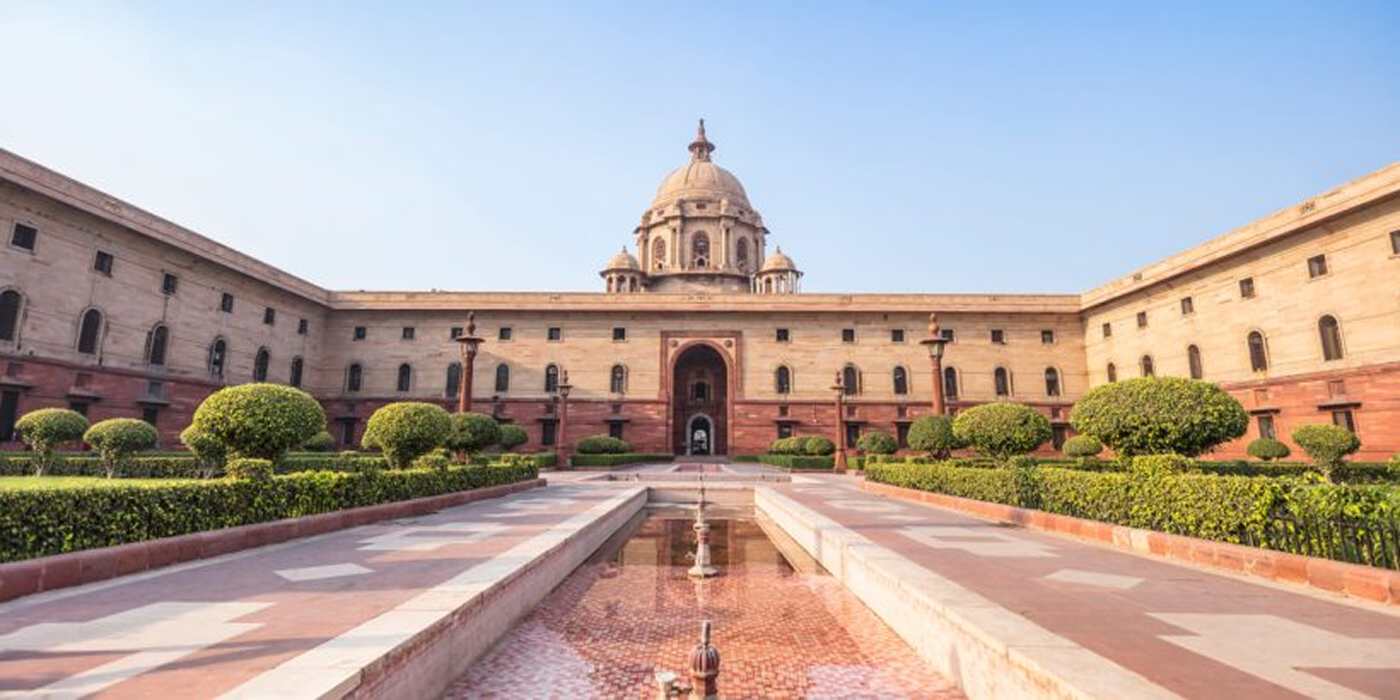
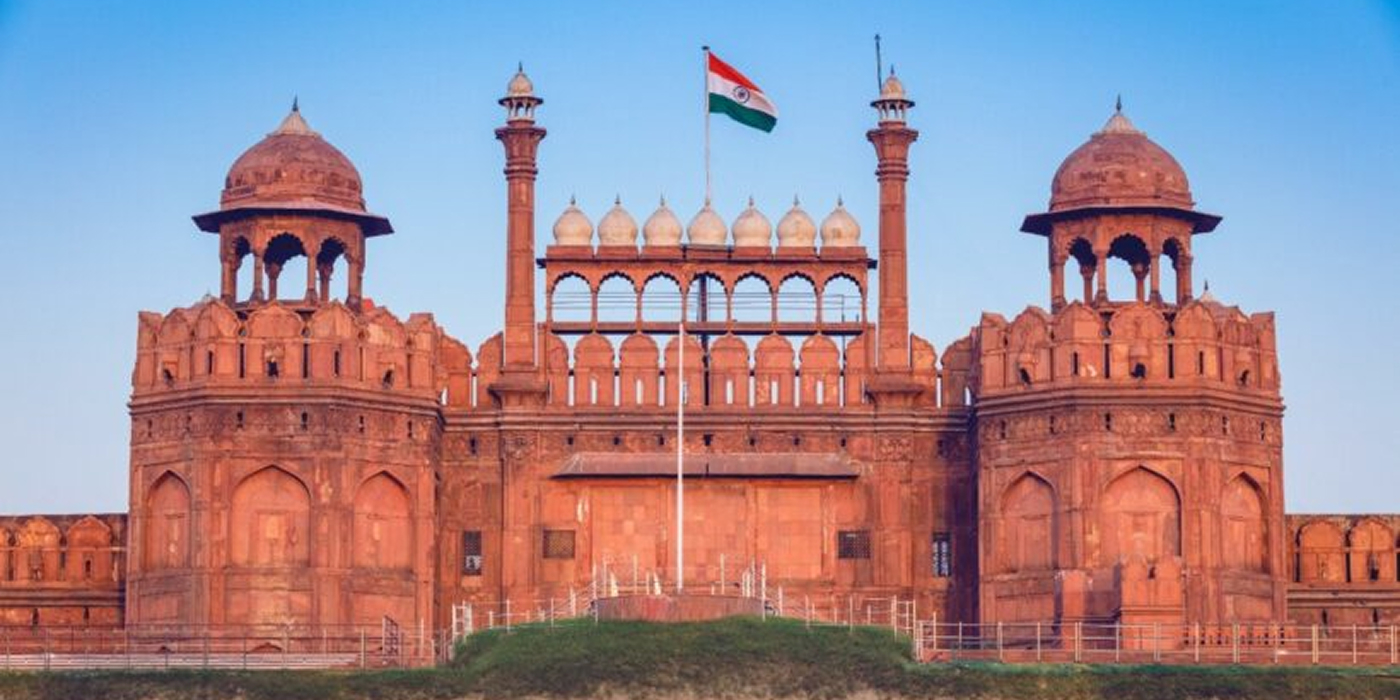
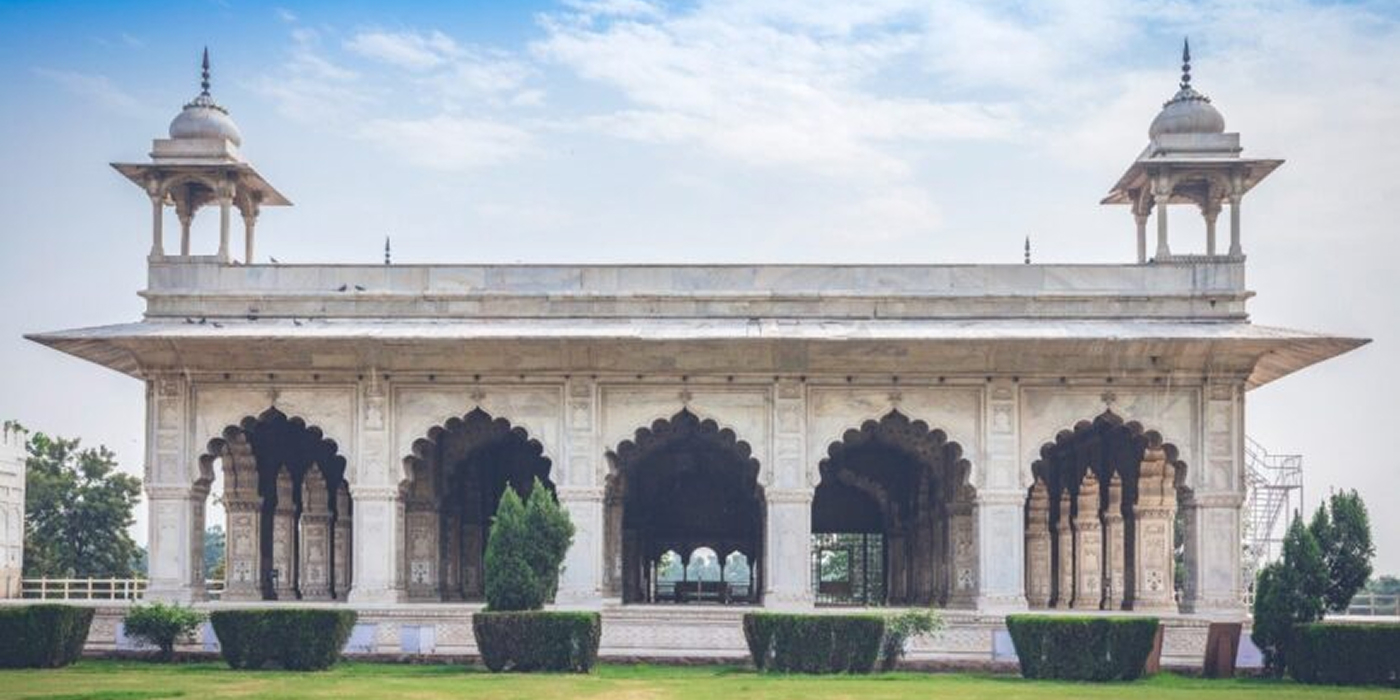
You will also pay a visit to The Red Fort (Delhi’s most magnificent monument was built by Emperor Shah Jehan.Some of the buildings it encloses are Diwani-am,Diwani-Khas, Rang Mahal,The Pearl Mosque etc.). The other attractions of this morning are Rashtrapati Bhawan (is the official residence of the President of India. Formerly the residence of the Viceroy of India, it has a magnificient view of the Rajpath and symmetrical North and South block Govt offices) and India Gate (is a majestic high arch,42 metres high, built as a memorial to the Indian Soldiers killed in world war 1).
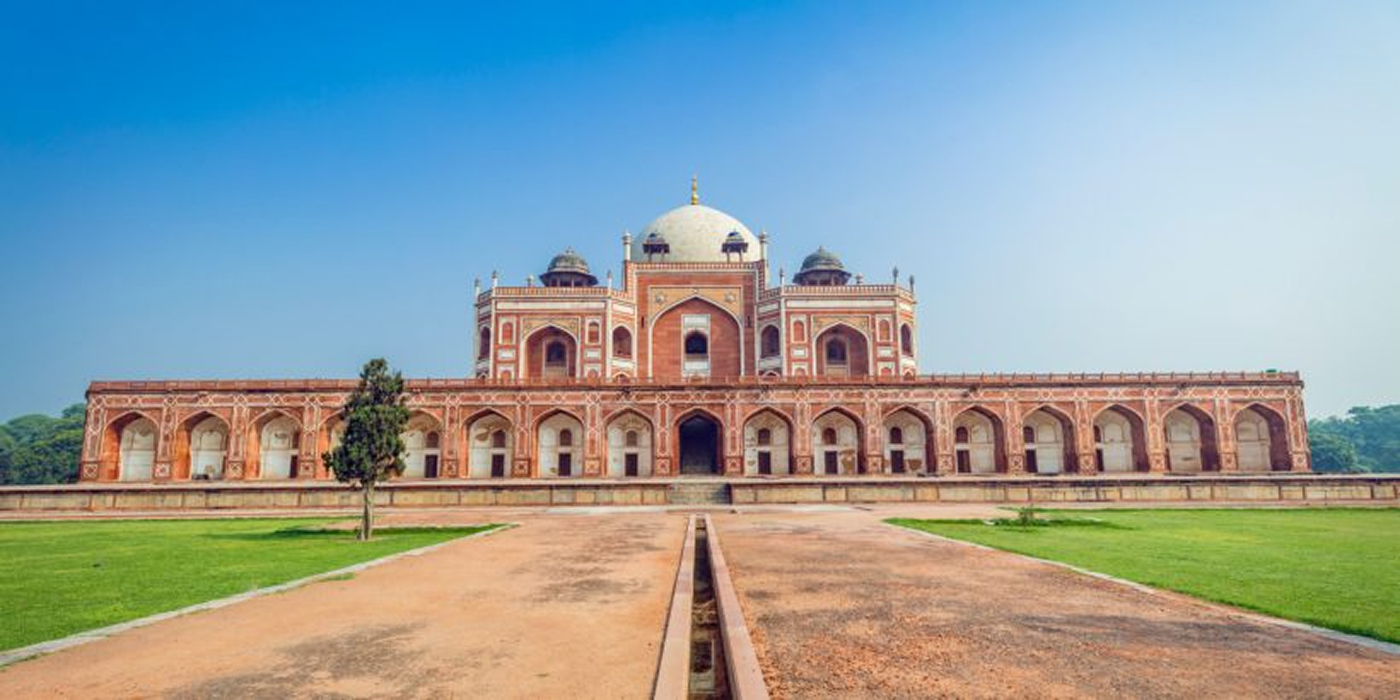
Pay a visit to The Qutab Minar (The 72.5m high tower dates back to the 13th century and is one of the greatest bequests of the Islamic culture). Also visit Humayun’s Tomb, It was built in 1565 A.D. nine years after the death of Humayun, by his senior widow Bega Begam. Inside the walled enclosure the most notable features are the garden squares (chaharbagh) with pathways water channels, centrally located well proportional mausoleum topped by double dome.There are several graves of Mughal rulers located inside the walled enclosure and from here in 1857 A.D;
Post sightseeing return to your hotel for overnight stay.
Day 3: Delhi – Kalka – Shimla – (Train / Himalayan Queen Toy Train)
Early morning, we will transfer you to railway station to board the train to Kalka.
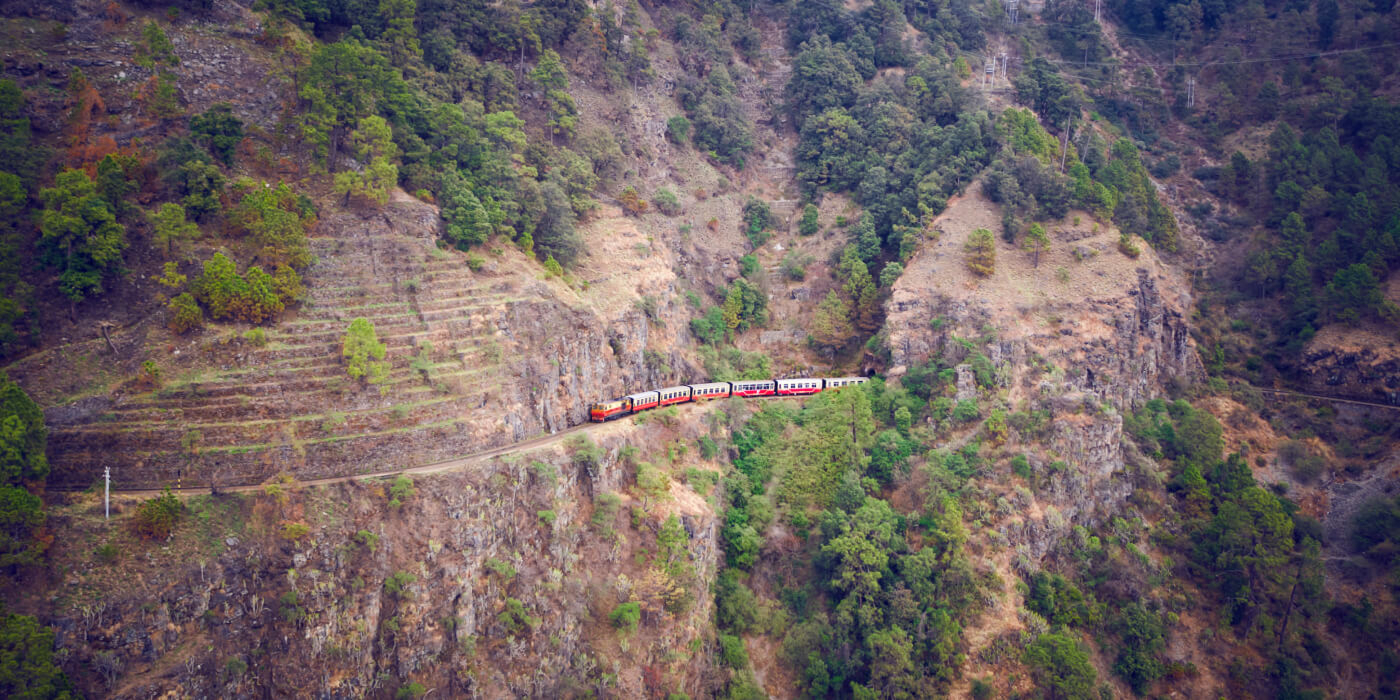
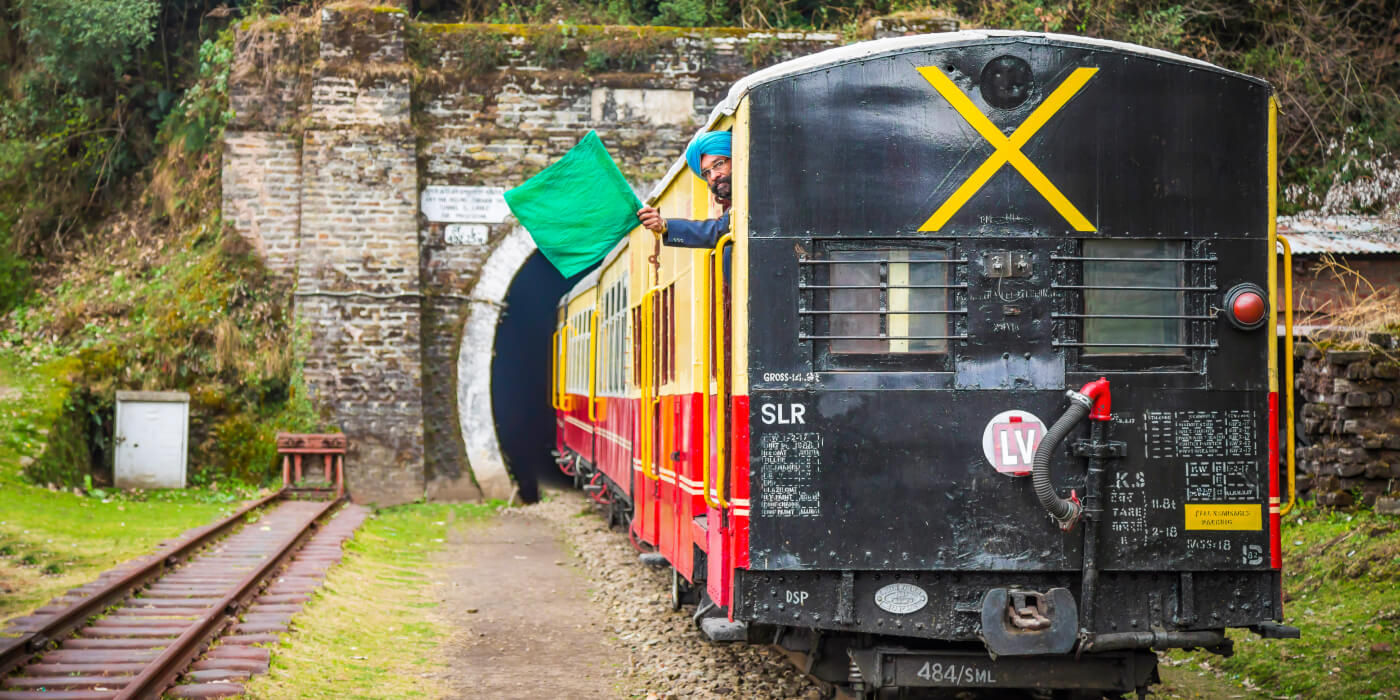
Upon arrival at Kalka, take your connecting Toy Train to Shimla. The 96-km long Kalka-Shimla narrow gauge railway track combines antiquity and modernity with a cocktail of pilgrimage and glamour. The rail motor car of 1927 vintage which had the unique distinction of bringing Mahatma Gandhi in 1945 to Shimla for talks with Viceroy Wavell about British plans for leaving India, is still rail worthy and remains a tourist’s delight. The train passes through 102 tunnels and 87 bridges and passes through beautiful valleys and hills and it almost moves in up word direction (climbing) throughout its journey ending at Shimla the capital of Himachal Pradesh.
You will be received by our representative at Shimla railway station and proceed to your hotel.
In the afternoon after noon walk through the Mall of Shimla (All visitors to Shimla inevitably walk down the Mall, the main promenade that runs along the top of the ridge – a busy shopping area with old colonial buildings, souvenir shops and restaurants. Narrow cobble-stoned paths wind down to the middle and lower bazaars where tribals from the hills around gather to sell their quaint and colorful artifacts. At the top end of the Mall is the Scandal Point, a large open square with a view of the town – a favourite rendezvous for visitors and the local people).
Day 4: Shimla – Sarahan (Drive 183 Kms/ 6 Hrs)
Morning start Jeep safari to reach Sarahan (1920 M) via Narkanda (2690 m) by covering approx 183 km in 6 hrs. It is located amid mountains with towering Srikhand Mahadev (5155 M) as a backdrop.
Arrive Sarahan and check-in at hotel.
In the afternoon visit Bhimkali Temple. The architecture of the temple is the prime highlight. The temple is all built with wood and presents a wonderful combination of the Hindu and Buddhist Temple style. Bhimakali Temple has a unique and unusual architecture and wealth of wood carvings.
Day 5: Sarahan – Kalpa (95 kms/4 hrs)
Morning after breakfast start safari to reach Kalpa (2759 m) via Rekonpio (2758 M) by covering appox 95 kms in about 4-5 hrs.
KALPA: Situated at the height of 2758 m above the sea level and 110 km from Sarahan, Kalpa is a beautiful and main village of Kinnaur. Across the river faces the majestic mountains of the Kinner Kailash range. These are spectacular sights early in the morning as the rising sun touches the snowy peaks with crimson and golden light.
Arrive and check-in at HOTEL for overnight stay.
Day 6: Kalpa – Nako – Tabo (163 KMS / 7 HRS)
Morning after breakfast start safari to reach Tabo via Nako.
On reaching Nako village which is a beautiful village situated at a height of 3662 Mtr, we take a short walk and visit the cluster of Old Monastery complex, later photo stop at Nako Lake.
Afterwards continue drive to Tabo. By evening arrive at Tabo and check- in at your Hotel for overnight stay
Day 7: Tabo
Morning after a leisurely breakfast proceeds for exploring Tabo.
Visit TABO CHOSKOR, a compound of around 9 small and large halls with Magnificient paintings and murals. Dating back to 1000 AD onwards, these were created under the supervision of the great Tibetan Translator Lotsava Rinchen Zangpo. Tabo that time became an important center of learning. Tabo Monastery is more known as the ” Ajanta of the Himalayas” .
In the afternoon we take a lovely village walk to see some of the cave shrines which were used by monks who came for learning.
Day 8: Tabo – Dhankar – Lallung – Kaza (80 Kms / 3 Hrs)
Morning we proceed to visit Lallung Monastery around, a small tiny village 20 km off the main road , visit the Old Gompa which is still intact in its old charm. Later we drive to visit Dhankar.
Dhankar was a strategic point during the early days as its is located on a high cliff mountian from where one can have a magnificient views of Pin valley and Spiti valley. We visit the ruin Fort and the Old Monastery.
After sightseeing continue driving to Kaza.
Arrive Kaza and check – in at Hotel for overnight stay.
Day9: Kaza
Morning starts drive to Ki Monastery (4116 M) and later drive to Kibber village (4400 M).
Ki Monastery: Overlooking Kaza from a height of about 13,500 ft, the Kye monastery is the largest in the valley and holds a powerful sway over the most populous part of the valley around Kaza. The gompa is an irregular heap of low rooms and narrow corridors on a monolithic conical hill. From a distance is resembles the Thiksey monastery near Leh in Ladakh. The irregular prayer chambers are interconnected by dark passages, tortuous staircases and small doors.
Kibber : This village is located at a height of about 14,200 ft in a narrow valley on the summit of a limestone rock. It is only 16 kms from Kaza and a bus service plies between these two places in summer. Kibber is a rather pleasant village with plenty of cultivation. The moment you get down from the bus you are greeted by lush green fields which look strikingly refreshing against the arid backdrop of lofty hills.There are only 80 houses in the village. The remarkable feature about the architecture is the use of stone instead of mud or adobe brick used extensively in the valley
Back to Kaza for overnight stay.
Day 10: Kaza – Keylong (183 kms / 8 hrs)
Morning start drive to reach Keylong via Kunjum La Pass
This pass is situated at 60 kms from Gamphu on the Gramphu-Kaza- Sumdo road. It provides chief access to the Spiti-valley from Lahaul which is separated from the Spiti valley by the great Kunzom range, and from where the Spiti, pronounced Piti, the chief river of the area takes its source. Though higher than the Rohtang Pass, Kunzom is safer and provides easier ascent and descent. The altitude of this pass is about 4590 m. The panorama as viewed from the top is breathtaking. The lofty Shigri Parbat can be seen right in front in all its grandeur. The crest of the pass has been marked by a chhorten of stones erected ages ago.
Continue your adventures drive along with Chandra river and glaciers in backdrop. Arrive Keylong and check-in at Hotel overnight stay.
Keylong: Keylong is the district headquarters of Lahaul and Spifi. At an altitude of 3156 m. Keylong is situated on the main trade route between the Rohtang and Baralacha passes above the Bhaga river. Most of the government offices are located at Keylong. This is also the hub-center of all commercial activity with a regular bazaar. Naturally Keylong is the most populated and busy village of the Lahaul valley.
Day 11: Keylong – Sarchu (116 Kms / 5 Hrs)
Morning after b/fast proceed for sightseeing of Sarshul Gompa and Khardung Gompa.
Later drive to reach Sarchu .You get to see some of the most breath taking landscapes that the Western Himalayas can offer. The scenery gets more stark and barren as we climb up to the 16,500-foot high Baralacha La. From the pass beautiful views of meadows and snow-capped mountains can be seen. By early evening we reach the small hamlet of Sarchu with set on a large plateau.
Check-in at Tented Camp for overnight stay.
Day 12: Sarchu – Leh (255 kms / 8 hrs)
Morning after an early breakfast, proceed to Leh.The journey would include a plenty of stops with views of the undulating hills, brown-barren-forbidding snow-clad beauty the mountains of Himachal and Ladakh.
The journey would not only take you through Lachulung-La (16616 Feet) and Taglang-La (17582 Feet) but also takes you through the incredible 45 km long flat section fo the Moray Plains which simply looks like a painting made by the mother nature.
Arrive Leh in the evening and check-in at your hotel for overnight stay.
Day 13: Leh
Morning after relaxed breakfast, we will take you to a guided tour of the Monasteries of the Indus Valley. Your excursion would include visits to,
HEMIS (45 KMS. SOUTH OF LEH)
Built on a green hillside surrounded by spectacular mountains, Hemis is the biggest and the most important monastery in Ladakh. It was built in the 17th century by Chapgon Gyalshas and ever since has enjoyed the patronage of the royal family. Hemis is the headquarter of the Drukpa order and all the monasteries throughout Ladakh are administered by it. This wealthiest monastery contains gold statues and stupas decorated with precious stones and many priceless old Thankas.
THIKSEY (25 KMS SOUTH OF LEH)
Thiksey,one of the most imposing monasteries belonging to the 15th century, stands on a crag overlooking the flood plain on the east bank of the Indus. The monastery belongs to Elugpa order (Yellow sect) and is a 12- Storey Monastery painted deep red, ochre and white with typical tapering walls. There is a 15m high Buddha figure at the entrance of the new temple. The layout of the monastery complex resembles the Potala palace in Lhasa.
SHEY (15 KMS SOUTH OF LEH)
On the East bank of the Indus river lies the beautiful Shey Monastery. Up to the 16th century it was the royal palace. There is a 17.5 m high blue haired Maitreya Buddha of copper, brass gilded and studded with precious gemstones.
Return to your hotel by the later part of the afternoon. Evening you can walk down to the nearest market on your own or spend some time at leisure.
Overnight at your hotel.
Day 14: Leh – Pangong – Leh
Morning after breakfast we Leave for Pangong Lake through Changla pass 5486 Mtrs. Pangong Lake, situated at 14,000 feet (4,267 m). A long narrow basin of inland drainage, hardly six to seven kilometer at its widest point and over 130km long, it is bisected by the international border between India and China. A few years back the government decided to open it to tourists though the lake and its surrounding is under surveillance. Enjoy the landscape in the back drop of the Lake. One rarely feels so close to nature and environment and the scenery is unforgettable.
Return to Leh for overnight stay.
Day 15: Leh – Lamayuru – Alchi
Today, we will take you to Alchi (Around 76 Kilometers west of Leh, south of the Indus River, is the little village of Alchi. It’s one of the most beautiful villages in Ladakh and an ideal place to get a feel for Ladakhi village life. Apart from its blissful tranquillity, Alchi has some of the subcontinent’s most impressive collections of Indo-Tibetan artwork).
Our first visit would be Monastery of Lamayuru (125 kms from Leh, Lamayuru is a pretty little village surrounded by the rocky Hindukush peaks.The Lamayuru Gompa is about halfway between the verdent valley of Kashmir and the upland desert plateau of Tibet. Dating back to the 10th century and belongs to Kargyu Pa sect (Red Hat Sect), Lamayuru is not only the most scenic of all Ladakh monastries, but also distinctly different from most others. The extreme aridity of Ladahk gives this temple complex the appearance of being built on the moon. Situated atop a beautifully eroded crag, this historic monastery has a fairy tale quality to it. As legend goes, in the valley of Lamayuru, in the times of Sakyamuni Buddha, a lake existed with crystal clear water and nagas (serpents) lived in it. Arahat Madhyantaka prophesied that a monastery be built and through his supernatural powers drained out the lake. The landscapes still bear the impression of watermarks. The monastery is officially called ‘Yung-dung Tharpa Ling’ (a place of freedom). The Gompa houses an impressive image of the 11 headed and 1000 eyed Chendezing, the God of compassion. Yuru Kabgyat as the 2 day Lamayuru festival is locally known, depicts a sacred dance-drama ending in the destruction of sacrificial offerings).
Afterwards you will drive back to Alchi. Upon arrival check in at hotel .Spend the evening at leisure.
Day 16: Alchi – Leh
Morning after breakfast, pay a visi to Alchi Monastery (The village of Alchi is famous for existence of Alchi Gompa- one of the oldest monasteries in Ladakh mainly known for its wall paintings which date back almost a thousand years. Founded by Ringchen Zangpo and situated in the middle of the village with elaborat pillars, priceless frescos and the extremely beautiful Buddhist wall paintings of 10th century, this world famous temple resembles the influence of Indian Buddhism rather then Tibeten Buddhism).
Later drive down to Leh.
Arrive Leh and check-in at your hotel for overnight stay.
Day 17: Leh – Delhi (Flight)
Morning after an early breakfast, we will transfer you to the airport to board flight to Delhi. Our Representative would receive you at Delhi Airport and take you to your hotel. Wash and Change rooms would be available upon your arrival. Later on our representatives will escort the group to the International Airport to board flight for onward destination.
Optional Tour to Agra
On arrival drive down to Agra and become a witness of beauty of The Taj Mahal .
Taj Mahal: The jewel of Muslim art in India and one of the universally admired masterpieces of the world’s heritage. Defined as “A Tear on the Face of Eternity”, this white-splendored tomb was built by Emperor Shah Jahan in the memory of his favourite wife, Arjumand Banu Begum, better known as Mumtaz Mahal (“Chosen of the Palace”). The unique moghal style architecture combines elements & styles of Persian, Central Asian, and Islamic architecture. Most striking are the black and white chessboard marble floor, the four tall minarets (40 m high) at the corners of the structure, and the majestic grand dome in the middle. On closer inspection, the lettering of the Holy Quran verses around the archways appear to be uniform. The lettering spacing and density has been customized to give this impression to the viewer. The impressive pietra dura artwork includes geometric elements & style, plants & flowers, which are common in Islamic architecture) and Agra Fort ( Near the gardens of the Taj Mahal stands the important 16th-century Mughal monument known as the Red Fort of Agra. More often than not, the Agra Fort is overshadowed by the pristine beauty of the Taj, but for those looking for something beyond romance, the Agra Fort is worth seeing. Akbar, the greatest empire-builder of the Mughals, commissioned the Agra Fort in 1565, and his grandson Shah Jahan, pulled down many of the original buildings and replaced them with marble ones, while Aurangzeb added the ramparts. Situated on the bank of river Yamuna, the Agra Fort today, stands as a citadel of the past that has witnessed centuries slip by. Built in red stone, the Agra fort stretches almost two kilometres on the bank of the Yamuna. A huge wall that stands 69 ft in height encircles the crescent shaped fort).
Post sightseeing, return to Delhi.
In the evening after fare-well dinner at local specialty restaurant, departure transfer to International airport to board Flight for onward Destination.